
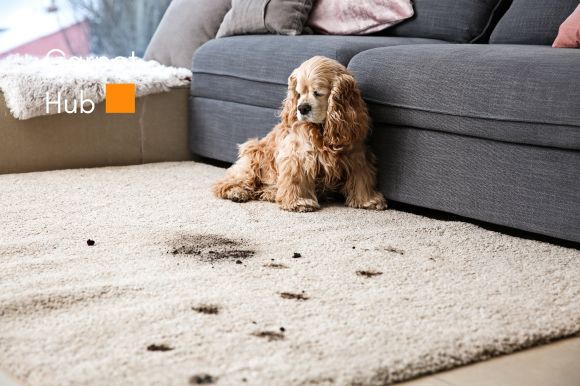
Odours creep up on a household slowly. Most people stop noticing their own carpet
within a fortnight, right up until a visitor walks through the door and their face gives the game away.
Soft flooring behaves like a filter for everything a room throws at it. Dust, cooking steam, damp coats, spilled drinks and pet hair all sink down into the pile, and once moisture joins the mix, bacteria multiply fast. That is usually the point where carpets smell, and an air freshener will only bury the problem until teatime.
Everything below explains what actually causes carpet odours, which methods clear them properly, and how to tell when a carpet has simply reached the end of its life.
If you are looking for new carpet, vinyl, flooring or carpet accessories such as underlays in Bristol, look no further than Carpet Hub. Speak to a member of the team on 0117 379 0764 or visit our showroom in Bitton, Bristol today.
Vacuum thoroughly, sprinkle baking soda across the affected area, let it sit for several hours, then vacuum again.
Two rounds of that routine will clear most everyday bad smells, because baking soda absorbs moisture and neutralises acids instead of masking them behind a perfume.
Whatever survives has normally soaked through to the backing or the carpet underlay, and problems that deep need enzyme cleaners, a steam cleaner or professional cleaning to shift.
Pile is built to trap things, which is exactly why it works so well as a floor covering and exactly why it starts to smell.
Skin cells, food crumbs, pollen and pet hair settle between the carpet fibres and become organic matter. Add a little moisture from wet shoes, a knocked drink or steam from the kitchen, and that debris begins to feed bacteria. Bacteria produce gases, and those gases are what you can smell when you walk into the room.
Moisture trapped beneath the surface makes the whole process worse. High humidity levels slow drying, damp spots linger under furniture, and mildew growth takes hold in the backing where no vacuum can reach. Bathrooms, hallways and rooms above unheated garages are the usual suspects.
Worth remembering too: smell affects air quality, not just comfort. A room that never quite freshens up is telling you something is still active down in the pile.
Skipping straight to a spray bottle wastes both time and product. Loose debris has to come out first, or you are simply wetting it.
Regular vacuuming is the single biggest factor in keeping a floor smelling fresh. Twice a week suits most homes, and every other day suits high traffic areas such as hallways and stairs. Slow, overlapping passes remove dirt far better than quick sweeps, since the head needs contact time to lift anything from the base of the pile.
Choose a vacuum cleaner with strong suction and a beater bar if your carpet is a cut pile. Edge cleaning matters more than people expect, because skirting boards collect the fine dust and pet hair that a main head cannot reach. A robot vacuum is useful for daily upkeep between proper cleans, though it will not replace a full machine when you are targeting an odour.
One warning here. Emptying the bag or canister regularly is essential, otherwise the machine pushes more dirt and stale air back into the room every time you switch it on.
Bicarbonate of soda has been the go to remedy for generations, and it earns the reputation.
Simply sprinkle baking soda evenly over the smelly area, working it in gently with a soft brush so it reaches past the surface. Leave it for several hours. Overnight is better, and a full day is better still for anything stubborn. Vacuum slowly afterwards in two directions to lift every trace of powder.
Why it works: baking soda absorbs moisture and neutralises the acidic compounds behind most unpleasant smells, rather than sitting on top of them like a fragrance. Cost is pennies, baking soda is safe around children and pets, and it handles the widest range of carpet odours of anything in the kitchen cupboard.
Covering a large area? Buy the catering size bag rather than kitchen tubs, and treat one room at a time so nothing gets walked through. For best results, repeat the process across two or three days on anything that has built up over months.
Acidic smells need something that breaks them down, and white vinegar does the job at a fraction of the price of branded products.
Mix equal parts white vinegar and warm water in a spray bottle. Lightly spray the surface until it feels barely damp, never soaked, then blot with a clean cloth and leave it to air dry with a window open. Vinegar smell disappears completely as the carpet dries, taking the original odour with it.
Test first. A quick patch test in a hidden area, such as under a sofa or inside a wardrobe, tells you within ten minutes whether the colour will hold. Wool and wool blends are more sensitive than synthetics, so treat them gently.
Fancy something more pleasant afterwards? Adding three or four drops of essential oils to the mix leaves a fresh scent, and lavender or tea tree both work well. Lightly mist only, since excess liquid is exactly what caused the trouble in the first place.
Pet urine is a different problem entirely, and ordinary cleaning products rarely solve it.
Uric acid crystals bond to the carpet fibres and reactivate every time humidity rises, which explains why a pee smell reappears weeks after you thought you had dealt with it. Enzyme cleaners contain bacteria that digest those crystals, so the source disappears rather than being diluted. Nothing else is as highly effective on dog urine, cat accidents or a sick smell after a child has been unwell.
Handle fresh spills immediately. Press down firmly with paper towels to draw out as much liquid as possible, never rub, then saturate the spot with an enzyme product and let it sit for the time stated on the label. Old spills need more patience and often two or three applications, since the treatment penetrates deep only when the area stays wet long enough for the enzymes to work.
Repeat pet accidents in the same spot usually mean the scent marker is still there. Targeted treatments across those specific areas will break the habit far more reliably than telling the dog off.
Damp is the one cause you cannot clean your way out of without fixing the source.
Musty smells, a mildew smell and what some people call moldy smells all point to the same thing: excess moisture sitting in the pile or the backing. Leaks, condensation, rising damp and carpets laid over concrete before it fully cured are the common culprits.
Find the root cause first. Feel for damp spots by hand, check under furniture, and lift a corner if you can to inspect whether the carpet underlay is wet. Wet underlay holds water for weeks and will keep reinfecting the carpet above it no matter how many times you clean the surface.
Then dry everything out. Open windows daily, run a dehumidifier to bring humidity levels down, and use proper ventilation in any room that sees steam. Fans pointed across the floor help enormously. Nothing else works until the carpet and the underlay dry completely, because mildew growth simply restarts the moment you stop.
Some odours are beyond a domestic routine, and there is no shame in that.
Booking a professional carpet clean makes sense once persistent odours survive two or three home treatments. A commercial machine injects hot solution and extracts it under pressure, which means the process penetrates deep into the pile and pulls contaminants out rather than pushing them down.
Hiring a steam cleaner yourself is the middle option. Cheaper than a specialist, more powerful than spot cleaning, and perfectly adequate for a room that just needs a proper deep cleaning once a year. Just resist overwetting, because a soaked floor that takes three days to dry creates the exact musty problem you were trying to solve.
Any decent carpet cleaner will also tell you honestly when a carpet is not worth saving. Contamination that has reached the underlay, or a stubborn carpet that smells again within a fortnight of treatment, has usually run its course.
Several common habits make stubborn smells worse rather than better:
Method | Best used for | Effective? |
Regular vacuuming | Everyday maintenance | Yes |
Baking soda | General bad smells, damp odours | Yes |
White vinegar solution | Stubborn smells, food and drink | Yes |
Enzyme cleaners | Pet urine, vomit, biological stains | Yes |
Steam cleaner | Annual deep cleaning | Yes, if dried fast |
Professional cleaning | Lingering odours across a whole room | Yes |
Air freshener alone | Anything | No |
Bleach or strong chemicals | Anything | No |
Soaking with water | Anything | No |
Replacement | Contaminated underlay, old carpet | Yes, when nothing else works |
Honest advice: some carpets have absorbed too much over too many years, and no product will undo it.
Carpets that have taken repeated pet accidents, flooding or ten years of heavy family use often hold odour in the backing itself. At that stage, spending again on treatments costs more than it saves.
A few Carpet Hub ranges worth a look if you have reached that point:
Pairing any of them with a quality underlay makes a genuine difference, since a good underlay resists moisture far better than the cheap foam most homes end up with.
Prevention takes minutes a week once the hard work is done, and it stops lingering smells ever building up again.
Deal with spills the moment they happen, keep a shoes off rule where you can, and open windows for ten minutes daily to move stale air out. Doormats catch a surprising amount before it ever reaches the pile. Booking one professional clean a year keeps everything on top of itself.
Getting rid of carpet smell comes down to three things done in the right order: lift the debris with a proper vacuum, neutralise what remains with baking soda or white vinegar, and treat biological sources with enzyme cleaners rather than perfume.
Fix the moisture behind any musty smell before you clean, or you will be repeating the job in a month. Follow those simple steps and most carpets recover completely, smelling fresh and looking better for it.
Looking for new carpet, laminate, flooring, or carpet accessories like underlays in Bristol?
Carpet Hub has you covered. Give our team a call on 0117 379 0764, or visit our showroom in Bitton, Bristol to explore our range and get expert advice.
Vacuum first, then sprinkle baking soda generously over the affected area and let it sit for several hours before vacuuming again. Most everyday carpet odours clear within one or two rounds, and it costs almost nothing.
Yes. Mixing equal parts white vinegar and warm water in a spray bottle, then lightly spraying the surface, neutralises acidic compounds behind many unpleasant odours. Vinegar smell fades entirely once the carpet dries, so nothing lingers.
Enzyme cleaners are the only reliable answer, since they digest the uric acid crystals that ordinary products leave behind. Blot fresh spills with paper towels first, then saturate the spot and allow the treatment to work fully before drying.
Moisture trapped in the backing or the underlay is the usual reason. Check for damp spots, dry the floor completely with fans and proper ventilation, and lower humidity levels in the room before treating the surface again.