
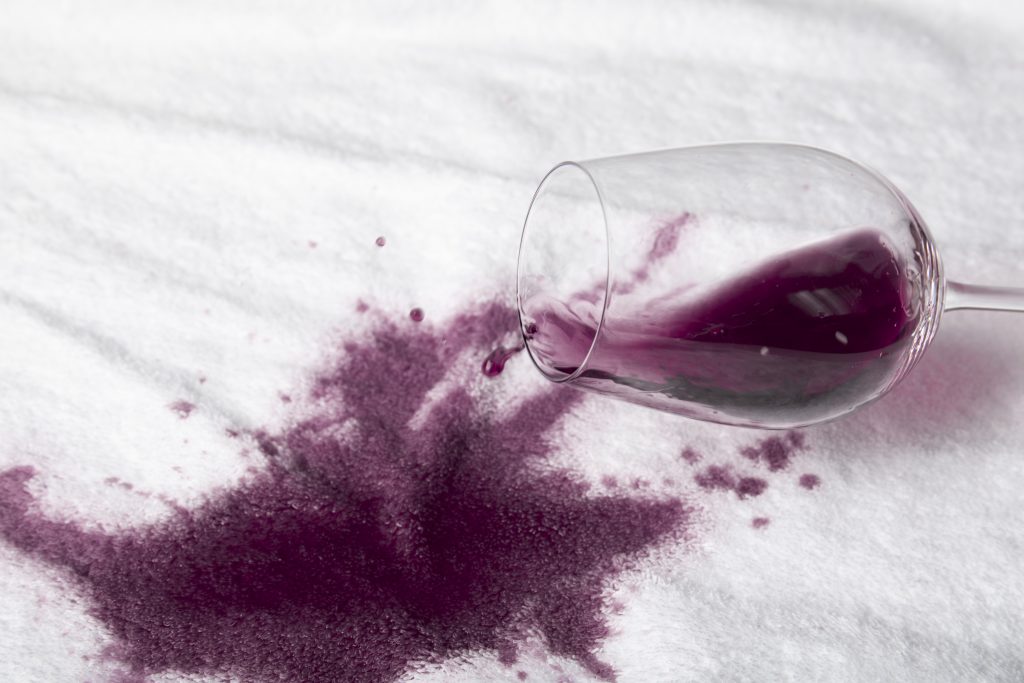
Dinner parties make a home feel lively right up until a glass gets knocked over. A single tipped glass can leave a deep purple patch across your carpet in seconds, and the instinct to grab a cloth and scrub hard is exactly the wrong one.
Red wine is one of the hardest drinks to deal with. It is full of natural dyes that latch onto carpet fibres within minutes. Rubbing it spreads the colour wider, and leaving it to dry gives those dyes time to set into the pile for good.
This guide walks through how to lift red wine safely, how to deal with an older stain that has already dried, and which mistakes turn a ten-minute job into a permanent mark.
If you are looking for new carpet, vinyl, flooring or carpet accessories such as underlays in Bristol, look no further than Carpet Hub. Speak to a member of the team on 0117 379 0764 or visit our showroom in Bitton, Bristol today.
Blot up as much wine as you can, rinse with cold water, treat it with washing up liquid and vinegar, then lift the rest with baking soda.
That sequence removes most red wine from carpet using things you already have at home. Blotting stops the stain spreading, and cold water dilutes the dye before it has a chance to bond with the fibres.
Any pink tint left behind afterwards is set-in dye, and a carpet stain remover or hydrogen peroxide mix usually clears it.
Wine soaks in like water for the first few seconds, which lets it run deep between the carpet fibres before you reach it.
Once it sinks in, the dye coats each strand. Cut pile carpets suffer most because the wine wicks up hundreds of separate tips, while loop pile tends to hold it inside each loop. Thick, plush carpets give it even more room to settle.
The carpet fibre adds a second problem. Wool and nylon both take dye easily, which is why they hold colour so well in the factory, so even a quick clean-up can leave a faint tint. Sugar in the wine also leaves a sticky residue that attracts dirt if it is not rinsed out.
Knowing this changes the approach. You are removing the liquid first and treating the dye second, and those are two different jobs.
Speed at the start saves a lot of work later.
Press a clean white cloth or a thick wad of kitchen roll onto the wine and push down firmly. Swap to a dry section each time it turns red, and keep going until almost nothing more comes up.
Pick up anything else that fell with the glass while you work. Broken glass, ice and bits of food all need to come up before you start cleaning, or they will get pressed into the carpet with the wine.
Cold water is the easiest way to stop the dye from setting.
Pour a few tablespoons of cold water onto the stain, then blot it straight back up. A spray bottle gives you more control. Keep the water to a minimum, because too much soaks the carpet and the backing, which creates a damp problem of its own.
When the cloth comes away pink rather than deep red, most of the loose wine has gone. That is the signal to move straight on to a cleaning solution.
Use something gentle. Clear washing up liquid, white vinegar and warm water work well, and none of them will harm the fibres.
Mix a tablespoon of washing up liquid and a tablespoon of white vinegar into two cups of warm water. Dab it onto the stain with a sponge, working from the outside of the spill towards the centre so it does not spread.
Blot after every few dabs and keep repeating. Scrubbing harder only frays the pile and pushes the dye deeper, and the next step deals with what is left far more gently.
Baking soda is how many cleaners lift the stubborn final traces.
Mix three parts baking soda with one part water to make a paste and spread it over the damp stain. Leave it until it is completely dry, which usually takes a few hours. The powder draws the remaining wine upwards as it dries.
Vacuum the paste away once it is hard and crumbly, otherwise you will tread it straight back into the carpet. Repeat until no mark is left behind.
Keep the paste to a thin layer and do not soak the area underneath. Some carpets have a jute or fabric backing that can brown or shrink if it stays wet for too long. Scented carpet powders should be avoided too, since added dyes and oils can transfer. Plain table salt is a quicker alternative if you need to soak up a fresh spill fast.
With the bulk gone, a pink or purple shadow sometimes remains. That mark is set-in dye, and it needs a stronger treatment.
Mix two parts 3% hydrogen peroxide with one part washing up liquid and dab it gently onto the stain. Work from the edge inwards and switch to a fresh part of the cloth as the colour lifts. A dedicated carpet stain remover is the other option, and it suits darker carpets.
Run a patch test first in a hidden spot, such as inside a wardrobe or under the sofa. Hydrogen peroxide can bleach coloured and wool carpets, so treat them with extra care and check the manufacturer’s guidance.
Finish by blotting the area with a little cold water to rinse out any sticky residue, then pat it dry with paper towels and let it air dry fully.
Every carpet responds a little differently, so it helps to know what you are working with.
Wool and wool blends soak up dye quickly and dislike harsh chemicals, so lean on cold water and washing up liquid and go easy on peroxide. Synthetic carpets such as polypropylene resist staining and tolerate stain removers well. Shaggy and deep pile carpets take longer, because wine sinks further down, and you may need to repeat the rinse step several times.
Carpet tiles and rugs are easier in one respect. Small ones can sometimes be lifted and rinsed from the back, which flushes the wine out instead of pushing it further in.
A few common reactions turn a simple spill into lasting damage:
Method | Best used for | Effective? |
Blotting with a white cloth | Every spill, as the first step | Yes |
Cold water rinse | Diluting the wine before it sets | Yes |
Washing up liquid and vinegar | Lifting most of the stain | Yes |
Baking soda paste | The stubborn final traces | Yes, once fully dry |
Table salt | Soaking up fresh spills fast | Yes |
Hydrogen peroxide | Set-in stains on light carpets | Yes, after a patch test |
Carpet stain remover | Old stains and sticky residue | Yes |
Rubbing the stain | Anything | No |
Hot water | Anything | No |
Steam cleaner on fresh wine | Anything | No |
Most wine spills come out completely, but not every carpet is worth saving.
A large spill on a carpet that is already worn, bleached by a previous attempt with a strong cleaner, or stained by wine left for weeks can leave a mark that stays visible. If the carpet was near the end of its life anyway, replacing it often makes more sense than paying for repeated treatments.
Some Carpet Hub ranges to consider if you are at that stage:
A good quality underlay is worth adding too. It makes the carpet feel softer, helps it last longer and adds a layer between any spill and the floor below.
A little care stops most spills before they start.
Keep glasses on tables rather than the floor or the arm of the sofa, and away from walkways, pets and children. Stemless glasses are much less likely to tip than tall wine glasses. Hard flooring such as laminate is worth considering for dining rooms, since spills wipe straight off with no risk of staining at all.
Removing candle wax from
Getting red wine out of carpet is about working in the right order: blot it fast, rinse with cold water, treat it with washing up liquid, then lift the final traces with baking soda.
Treat any leftover colour separately with hydrogen peroxide or a stain remover, test first, and avoid hot water, bleach and steam. Done carefully, most carpets come back looking as good as they did before the glass tipped.
Looking for new carpet, laminate, flooring, or carpet accessories like underlays in Bristol?
Carpet Hub has you covered. Give our team a call on 0117 379 0764, or visit our showroom in Bitton, Bristol to explore our range and get expert advice.
Blot the wine with a clean white cloth, rinse with a little cold water, then dab on a mix of washing up liquid, white vinegar and warm water. Blot again until the cloth comes away clean.
Yes, salt works well on a fresh spill. Pour a thick layer over the wine, leave it for a few minutes to soak it up, then vacuum it away and carry on with the cold water and washing up liquid steps.
Dampen the dried stain with cold water, then use a carpet stain remover or a hydrogen peroxide mix. Work from the outside in and do a patch test in a hidden area before treating the visible stain.
Not reliably. White wine dilutes the colour, but it adds more liquid and sugar to the carpet, which leaves a sticky patch that attracts dirt.
A professional carpet cleaner is worth it for large spills, delicate wool rugs or stains that survive two or three attempts at home. They have solutions and equipment that can lift dye without damaging the fibres.Not reliably. White wine dilutes the colour, but it adds more liquid and sugar to the carpet, which leaves a sticky patch that attracts dirt.